
Renovation-related content in the mobile home category online seems to vacillate between too general DIY information. And too technical contractor speak that leaves out the why altogether. Fortunately, Harry Moore from Mobile Home Exteriors falls squarely into the middle by dealing with issues related to the outside specifically of manufactured homes.
This paper will tell you about the person behind the website. What kind of renovations the website deals with. And the practical takeaways you can use whether you’re doing your whole house or just an upgrade for the weekend. Mobile homes have their own quirks, and thus information that is written about them is more valuable than information written about regular houses. Because of their uniqueness.
Who Is Harry Moore at Mobile Home Exteriors
The website, which includes an “About” page of its own. Explains that Harry Moore is considered the founder of the website Mobile Home Exteriors. Which specializes in manufactured home renovations and curb appeal. This website caters to a pretty narrow niche. Namely assisting mobile homeowners who struggle with finding information about how to improve the exterior of their home. Because many other websites neglect to discuss that topic. This narrow niche is clearly the main advantage of the website.
From Contractor Background to Mobile Home Specialist
The content typically begins by highlighting his experience in residential construction and project management. Before shifting its focus to manufactured housing. This is significant, because there are unique issues related to skirting, foundation fakery. And the lighter weight of materials used for mobiles compared to those involved in conventional stick framing construction. Whether all of the information provided in the background is verifiable or not. What is clear is that the information provided demonstrates knowledge of the difficulties involved in mobile home renovations.
The Mobile Home Exteriors Team and Mission
In addition to Harry Moore, the website cites Bobby Kane as another contributor for interior design. Thus providing a balanced approach from curb appeal to interior decorating. The main goal set by these designers is not about expensive renovation. But rather about more realistic ideas that would be easy and inexpensive for manufactured home owners to implement.
Core Exterior Upgrades Featured on the Site
Much of the published content circles back to a consistent set of exterior categories. Since these areas tend to matter most for manufactured home curb appeal. Understanding these core categories gives you a useful framework before diving into specific projects.
Skirting, Siding, and Roofing Basics
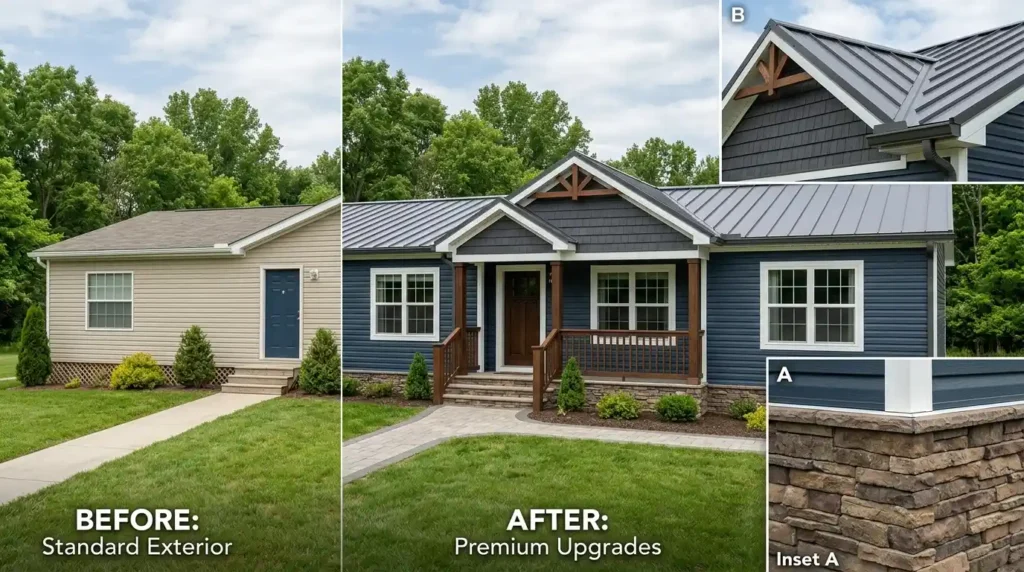
Frequently, skirting is mentioned as one of the most significant changes one can make. Since plain white vinyl slats provide a very temporary impression. Skirting in imitation of stone or concrete, on the other hand, conveys the image of permanence, completely altering the impression that the whole house gives. Materials for siding such as vinyl siding, imitation wood panels, or stucco-like finishes receive the same level of consideration, along with roof modifications such as faux gables or metal roofs that add a new silhouette to a house.
Paint, Trim, and Door Color Combinations
The use of color is a consistent theme in this kind of material, and there is no wonder why. Color painting the house and avoiding the monotony of just one single color gives the look a complete and solid feel, whereas a secondary color is used for trims in order not to make the whole composition cluttered. Door color also receives its fair share of attention, because it is the quickest and easiest way to give an individual character to an otherwise bland exterior facade.
Budget-Friendly Curb Appeal Strategies
A recurring theme across this kind of content involves proving that meaningful transformation doesn’t require a massive budget. Sequencing and prioritization matter just as much as the individual materials chosen.
Small Changes That Add Up Fast
The painting of house numbers, some improvements in landscaping, and painting of the front door are the examples of such minor tasks that will make your property stand out and change its first impression. All of them don’t need any special equipment or professional help and become the easy entry point into the overall project for those who are only beginning to renovate their homes.
Sequencing Upgrades for Maximum Impact
Large projects require that things be done in a particular sequence in order to get the best results. The order involves doing the roof first because it will help protect all other aspects below it. The other steps include skirting, then the siding and lastly the porch or entryway. The reason why one does not do the siding first is because it can cause damage to the newly installed skirting.
Materials and Techniques Worth Knowing
Material selection specifically for manufactured homes differs from standard residential renovation advice, since weight, installation method, and climate resistance all matter more here. A few specific products and techniques show up consistently in this niche.
Faux Stone and VOG Paneling Options
“Vinyl on gypsum” or simply “VOG” is a term used for interior wall paneling that is commonly found in manufactured houses, and preparing them correctly is crucial before painting them. From the outside, stone imitation and hand-cut stones siding panels create the effect of true stonework without adding extra weight to the mobile home’s foundation, which cannot bear that. Using a combination of different siding textures, such as stone imitation below and wooden ones on top of them, makes the look more unique.
Awnings and Energy-Efficient Windows
Purpose of awnings is two-fold because they not only provide shade, thus maintaining low temperature indoors but also make buildings more aesthetically pleasing due to their unique design. Awning doors that cover windows in case of storms add a safety feature to areas where high winds prevail. Window replacements which save energy can go hand in hand with such renovations.
Why This Resource Matters for Mobile Homeowners
Manufactured housing occupies a strange gap in most home improvement media, which tends to assume traditional stick-built construction throughout. That gap is exactly where niche resources like this one carve out genuine value for a specific audience.
Addressing Challenges Unique to Manufactured Homes
Compliance standards, panel weight limits, and factory-built wall assemblies all create constraints that generic renovation advice simply doesn’t account for. Content built specifically around these constraints saves homeowners from costly trial and error, particularly around skirting and roofing choices that need to match a mobile home’s specific structural realities.
Sustainable and Long-Term Value Considerations
Content on this site is also likely to be focused on the use of sustainable building materials and energy-efficient design along with purely aesthetic modifications. This trend represents a change within the home improvement industry as a whole, one in which sustainability is just as important as aesthetics.
Conclusion
Whatever the actual history of this byline is, the reality of the usefulness of the type of custom content like this is undeniable. When you start with structural decisions and follow up with cosmetic ones, and take care to get your colors properly coordinated, you’ll find the advice attributed to Harry Moore of Mobile Home Exteriors very useful.
Frequently Asked Questions
What are some typical subjects Mobile Home Exteriors discusses?
It normally deals with manufactured home exterior renovations, including skirting, siding, roof work, color scheme of paint and budget renovation steps. Interior design topics are included as well via a different contributor.
Which upgrade provides maximum curb appeal change at minimum cost?
Re-skirting is often recommended as one of the high impact and relatively low cost upgrades, since it changes the impression of the home’s permanency from outside. New paint on the front door is also considered an inexpensive high-impact idea.
In which sequence should the exterior renovations be done?
It is suggested that roofing should be completed first, then comes the skirting, siding and porches/entryways details last. Such sequence is recommended to protect new components from damage at following stages.
Is manufactured home renovation different from regular home renovations?
Indeed, mobile homes require different considerations in terms of weights, compliance issues and lightweight construction.