
Searches for “DIY home elevators” yield countless DIY kits, YouTube videos. And even online marketplace listings that assure a quick installation within a weekend. However, this is far from the case and, in truth, is a very serious issue. That cannot be understated as much as the listings may lead us to believe.
Installing a passenger elevator on your own is not only a highly dangerous undertaking. But is even considered illegal in most areas due to the fact that the necessary work should only be carried out by a licensed professional according to building codes. This article provides insight into what you can really do, what risks you have. And what other options are worth considering.
What DIY Home Elevators Actually Are
This term is used rather casually on the Internet. Encompassing anything from the real elevator kit to miniature educational toy model. Being aware of what can be done will involve distinguishing between marketing rhetoric and legal and safety regulations. Those homeowners who are seeking home elevators usually try to save money.
Full DIY Installation Isn’t Legal for Passenger Elevators
For the installation of an elevator system in a home that will be used to transport passengers. There is the need for a certain level of expertise in areas. Such as electrical installation, construction work, and mechanical systems as well as understanding of the local building codes. In most cases, it will not be possible for the homeowner to install a complete elevator system on their own despite. The confidence they may have in their ability to do so. This is not a case of overreaching by the authorities. But rather a situation that requires a certain level of caution.
The Hybrid Partial-DIY Model Explained
There is, however, a much more practical iteration of this concept that has appeared. A hybrid system whereby the homeowner takes care of everything non-technical. And the professionals do everything that can endanger someone’s life. You will definitely save some money using such an approach. At the same time, no one will be endangered by the lack of experience in electricity or structure work. It is the right system for those who like the concept of “DIY” but need something safe and code-compliant.
Home Elevators vs Home Lifts vs Alternative Mobility Devices
Not all vertical transport solutions are regulated by the same regulations. And this distinction helps you know what is practical for your needs. The language that we use is much more important than you first think.
Enclosed Cab Elevators and Regulatory Requirements
The real elevator in the house has a compartment. Which is accessible to wheelchairs as well. And comes under very stringent laws regulating transportation of multiple passengers at one time. This is due to the fact that. These are most prone to failure and have the highest risks involved with it. It is safe to say that only professionals would do the installation for it.
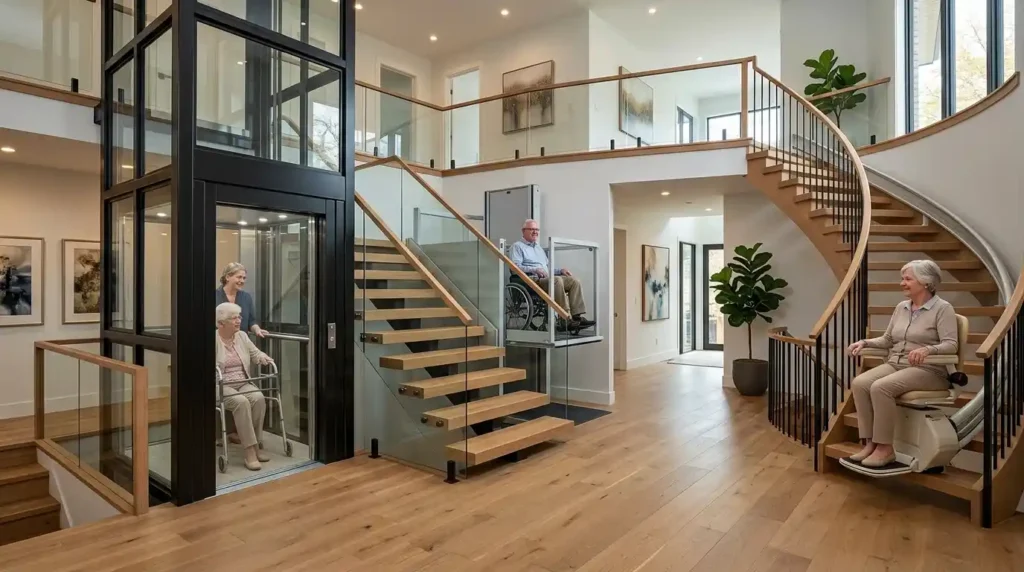
Platform Lifts, Stair Lifts, and Shaftless Options
Vertical platform lifts, stair lifts, and shaftless elevators usually do not require as much approval from the regulatory agencies as enclosed cab elevators. They are usually suitable for those with limited mobility problems. And not for the need to have an elevator for transporting people throughout the building. The shaftless design or self-supporting elevators can easily fit into any corner, closet, stairwell, or garage without needing the hoistway. Thus making installation easy.
What Homeowners Can Actually Do Themselves
Once you know the limits of legality, then it’s much easier to pinpoint where your efforts can actually lower expenses. It’s at this point that the hybrid approach takes on real-world applicability.
Non-Technical Tasks You Can Handle
The removal of furniture and objects from the installation site, minor carpentry, and any general finishing jobs are all reasonable efforts for the homeowner to make. Taking measurements against the kit specifications before ordering is well within the capability of the homeowner, and will ensure that there are no expensive errors made in the process.
Work That Must Go to Licensed Professionals
Electrical wiring, structural modifications, and the actual machinery installation should always go to licensed, experienced installers. Post-installation safety checks matter too, since ongoing reliability depends on components being correctly calibrated and tested by someone trained specifically for elevator systems. Attempting these steps yourself risks not just safety, but also voiding any warranty coverage the kit manufacturer originally offered.
Codes, Permits, and Insurance Considerations
It is important to note that compliance with regulations does not involve unnecessary formalities; it is what keeps you, your family, and any visitor to your house safe. Failure to comply with these regulations causes a lot of trouble.
Building Codes Like ASME A17.1 and EN 81
US elevator installations need to be in compliance with ASME A17.1, while European elevators need to comply with EN 81 specifications. The specifications encompass all aspects of elevator installations including mechanical tolerance and emergency stop capabilities. Licenses and inspections are mandatory at various stages of the installation process, and failure to license the installation process can be problematic should something go wrong in the future.
Why Insurers Care About Proper Installation
The insurance company will require documentation that the elevator system was installed in accordance with building standards. An elevator system which was installed using a do-it-yourself home elevator system without the proper licenses and inspection can be a problem for the insurance company. If an accident happens and they discover that there is no proper documentation, then this can lead to problems. Making sure that you comply with the needs of your insurance company before installing the elevator system can save you from this trouble.
Weighing Cost Savings Against Real Risk
“Cost is, and will always remain, the main motivator behind looking for DIY solutions, and this cannot be blamed on anyone,” but it is necessary to understand what sources of saving one should look for.
Where Partial DIY Actually Saves Money
The cost of labor involved in preparation, finishing, and getting the location ready is an important part of the overall cost of installation. Taking care of these tasks alone while delegating the equipment and the cabling to experts will help you reduce your final cost significantly without posing any sort of risk to your safety.
Why Cutting Corners Costs More Long-Term
A Do-It-Yourself kit that is not installed properly would utilize inferior material with lesser longevity than professionally installed systems. Equipment that needs to be repaired because of its early need would make any savings done at the time of installation void. When considering additional problems like insurance and safety concerns, there is very little reason why an unattended DIY system would be favorable when taking into account all aspects.
Conclusion
The truth is that the real answer to the question of whether building a home elevator yourself is worthwhile depends completely on what your idea of “DIY” really entails. It’s illegal and unsafe to build a passenger elevator yourself in most places, but a combination process, where you do the prep work and finishing while professionals deal with the technology, does work.
Frequently Asked Questions
Is it legal for me to do a home elevator installation by myself?
In most cases, there will be a need for licensed persons to perform all technical installation work on a passenger elevator. Homeowners may be able to contribute during preparation and completion stages only.
What distinguishes a home elevator from a home lift?
While home elevators refer to cabin-style elevators used for passengers or wheelchair access, home lifts usually feature open design with less stringent installation regulations.
Are shaftless elevators a safer option for DIY installation?
Even though such types of elevators usually require less building work, it is not advisable to do such an installation by yourself because of licensing requirements.
Will my home insurance policy cover the DIY installation of my elevator?
The coverage will be contingent upon whether you have followed your local regulations and obtained required licenses and permits during installation.