
Once, there was an acquaintance who decided to employ a designer strictly because of an excellent Instagram page, but then found out half-way into the project that the company did not have any experience working on a retail build-out. It is vital to be aware of the differences in skills of commercial interior designers and home decorists in order to prevent such mistakes in the future and avoid spending unnecessary money.
In this article, you will find out what does a commercial interior designer do, in which industries their services are the most demanded, and all the key questions you need to ask them.
What Commercial Interior Designers Actually Do
This is not just a matter of choosing paint colors and furniture. These individuals oversee all aspects of how a project looks and works from beginning to end. Having a full understanding of the extent of their responsibilities can help ensure expectations are realistic right from the start.
From Space Planning to Construction Administration
The common design process begins with space planning, whereby the way the people are going to move through a certain space is planned. Following that stage, materials, finishes, and furniture are selected, which not only fit the requirements in terms of aesthetics but also have commercial standards of durability. Many companies even go ahead to administer the process during construction, where they coordinate with contractors to ensure that the end result meets the design specifications. Such commitment makes a true commercial firm separate itself from other firms that simply provide mood boards and then vanish.
How This Differs From Residential Design
Whereas residential interior design is a task designed for one family’s aesthetic preferences, a commercial project should comply with branding, safety regulations, and functional necessities related to people’s constant movements. The furniture should be more durable, the materials have to follow more serious safety standards, and the layout may require some special adjustments which residential projects usually do not require. This additional level of intricacy is precisely why hiring an experienced commercial firm becomes so important.
Industries That Rely on Commercial Interior Design
The interior design process is extremely beneficial for almost any kind of business organization, even though priorities vary greatly depending on what particular industry one works within. This knowledge will help you choose an appropriate designer who specializes in your field.
Offices and Coworking Spaces
The office design process is currently experiencing major changes, with organizations completely overhauling their entire layout based on the nature of hybrid working. The nature of coworking spaces requires an extremely flexible use of furniture as well as having a strong brand identity due to the fact that it is essentially the face of the organization in front of its clientele and recruits.
Retail, Hospitality, and Healthcare Environments
Retail interiors must help direct customer traffic to important merchandise while conveying the branding message at every opportunity. For hospitality projects such as boutique hotels and restaurants, the focus is much more on the mood and sensory elements that create the right guest experience. Medical and healthcare facilities have different design requirements in terms of aesthetic appeal balanced with safety standards and infection control. All of these specific areas can benefit from having a designer with experience working on projects in the field.
The Design Process From Consultation to Completion
Understanding the typical project timeline helps set realistic expectations before work begins. Most engagements follow a fairly consistent structure, even though specifics vary by firm.
Initial Consultation and Brand Strategy
It normally begins with a consultation to establish what your goals are, who your customers are, and how your company is perceived now. At this point, an effective designer will ask a lot of questions without immediately going to a mood board because a misaligned aesthetic could sabotage the whole brand development strategy in the end.
Coordination With Contractors and Vendors
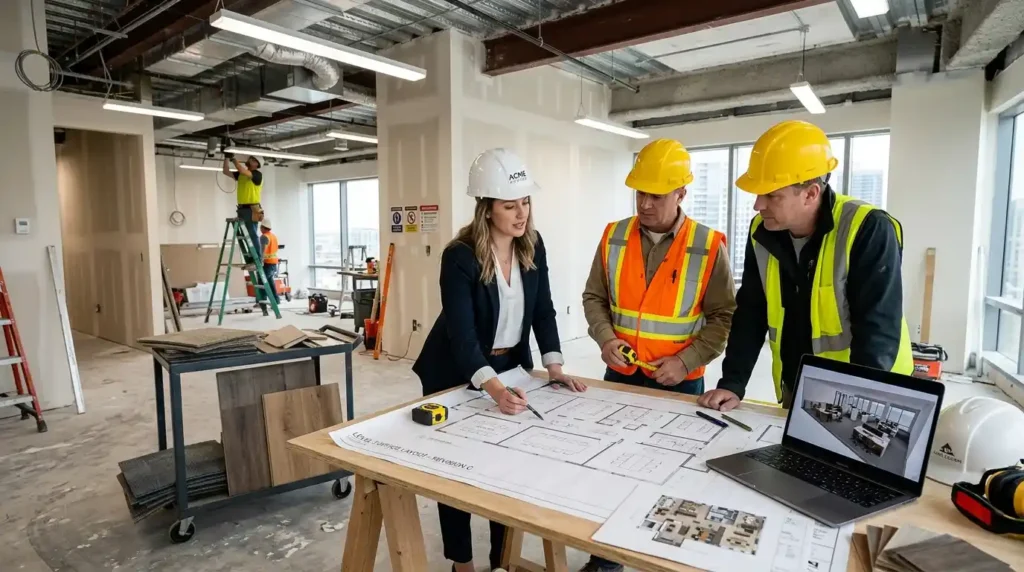
When a concept is agreed upon, designers will work in close collaboration with general contractors, furniture suppliers, and other consultant firms to realize their concept. Effective vendor management ensures that any costly delay will be avoided especially when dealing with customized furniture and materials. Good communication among the clients, design firm, and construction team often marks the difference between good projects and bad projects.
What to Look for When Choosing a Firm
Not every design firm suits every project, so evaluating fit carefully matters more than chasing the flashiest portfolio alone. A handful of practical factors reveal genuine compatibility.
Portfolio, Awards, and Track Record
Review previous work by the firm in your particular industry, be it retail, hospitality, or even corporate office space. Winning an award is a good indicator but, in most cases, a credible history of projects is more important than the actual award itself. For example, a firm called Gensler, established as early as in 1935 as a company specializing in corporate design, has developed its unique style through years of commercial design practice. Also, asking for pictures of the completed and inhabited interiors is more revealing than looking at the glossy renders.
Budget, Timeline, and Communication Style
Inquire directly into the usual project schedules and how the company deals with budget overages that are always bound to happen. Communication is equally important as creativity because the two of you will work together for weeks or months. The company that reacts quickly and communicates its decision making processes well during the consultation phase usually keeps the same pace through the whole project. The poor communication from the beginning is not likely to get better during the project itself.
Trends Shaping Commercial Spaces Today
Commercial design evolves along with the changing practices of work and customer expectations. Being aware of these changes can help you brief the designer better initially.
Post-Pandemic Office Layouts
Office layouts have evolved in favor of being hybrid in nature, compared to the previously seen arrangement of fixed work stations for all employees. It is becoming increasingly common that many companies focus on creating spaces where employees enjoy working, in terms of collaboration and hospitality elements.
Technology and Virtual Design Tools
Today, it is possible for clients to see their virtual reality walk through and renderings. The use of this technology helps avoid unnecessary costs from making last-minute changes in the middle of the project since clients can address any concerns about the layout and materials used at an early stage.
Conclusion
Selecting a good commercial interior designer requires aligning industry experience, communication skills, and financial expectations with your particular project. Whether your project entails remodeling offices or building out a restaurant, the proper designer is well aware of the visual requirements as well as the special considerations of commercial projects. If you take enough time to examine portfolios and ask pertinent questions prior to making a choice, you will ensure that there is no disappointment later on.
Frequently Asked Questions
What distinguishes commercial interior design from residential design?
Commercial projects demand compliance with higher safety codes, have to withstand higher occupancy and wear and tear, and promote a stronger brand identity as opposed to residential projects which cater to individual preferences. This additional challenge requires commercial expertise.
What is the cost of hiring a professional commercial interior design firm?
There is a broad range of expenses for designing services depending on the size of the project and choice of materials, so you need to get a quote right away. Full-scale buildout of course costs more than renovations.
What kinds of questions do I need to ask a designer before I hire one?
Questions regarding industry experience, project deadlines, approach to dealing with budget changes and delays will help a lot. Looking into their previous projects in your particular industry, be it retail or hospitality, will show you the compatibility.
Does the design company do construction?
Most companies provide services up until construction administration while working with contractors and vendors, but do not conduct construction activities themselves.