
One of my friends in the real estate development sector almost bypassed. The process of hiring an interior designer on a project in London. Thinking of saving costs on the project. But had to see the competing project selling its units three months ahead. Due to the superior feel of being finished. This is an example of what has caused the shift of property developers to view interior design services in the UK. As not just part of the finishing process, but a means of generating income.
In this guide, you will get to know what interior designers offer the developer in terms of design. And how design choices influence gross development value.
Why Property Developers Interior Design Projects UK Succeed With Early Design Input
Timing is everything in the field of developmental efforts and this is true of interior design as well. Introducing a designer at the end when the architectural design process is complete is restrictive for their contributions. The common characteristic in the most successful interior design. Ventures by property developers in the United Kingdom is engaging a designer early on.
The Commercial Case for Involving Designers Early
While it is quite natural for most developers to begin with planning permission and structural considerations. Not to mention cost of construction, the fact remains that interior design. Such as circulation, storage logic and material flow are what determine the buyer’s everyday experience of the space. If the designer is on board from an early stage of development. Then it becomes possible to detect any problems with the layout design. Before it becomes too costly to change it on-site. There have been some instances of design being used. As a means of making profits significantly higher than the usual 15 percent threshold. In those cases, it often had something to do with the timeliness of establishing the design brief.
Aligning Budget, Brief, and Target Market
As important as timing is clarity of the brief. It is important to know your end buyer or renter, which could be first-time buyers, corporate renters, or high-net-worth individuals, before making decisions on any finishing. The budget must also be fenced out early, especially where the end dressing or show home setting is concerned, because this will probably be cut down on in later stages if not done at an early stage.
Core Services Interior Designers Provide to Developers
Interior designers working with developers offer far more than colour schemes and furniture selection. Their scope typically spans the entire project lifecycle, from concept through to final styling.
Spatial Planning and Layout Optimisation
Spatial planning that is well done allows maximizing the use of space and improves the movement from one room to another, which will have an immediate impact on the impression that the buyer has when viewing it. Mood boards and design concepts are done at the early stages, and layout is perfected for buildability and uniformity in all units in the scheme. All these considerations include technical detailing, provision of storage spaces, and lighting design because they contribute significantly towards making the product look more refined.
Show Homes, Furniture Packs, and Staging
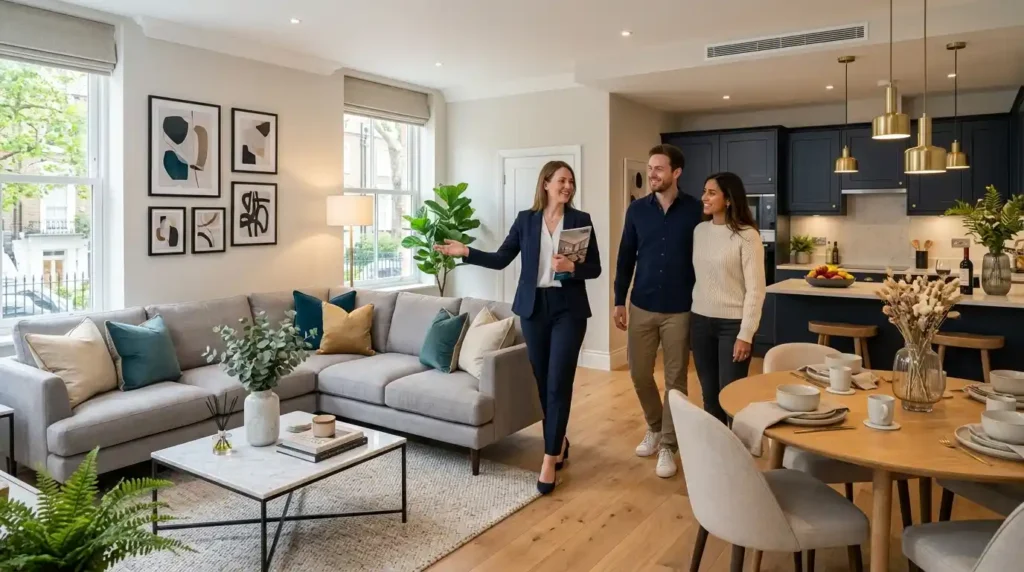
Nevertheless, show flats will continue to be one of the most potent selling devices, as they allow the purchasers to see themselves living in the unit instead of just seeing an empty unit. Furniture kits provide a miniaturized version of the concept where smaller units and rented units require faster turnovers. It is also important to stage the common areas and the reception area, as they might be the first thing that the prospective buyer sees when visiting the property.
Designing for Different Development Types
Not every scheme calls for the same design approach, and understanding these differences helps developers brief designers more effectively. Property type, tenure, and target market all shape the right strategy.
Build-to-Rent and Multi-Unit Schemes
Build-to-rent projects require robust construction materials that can withstand tenant turnover and at the same time be comfortable and inviting. The consistency of materials is crucial in this instance as it is common for designers to choose finishes which are used in multiple units. It is important to have coherent design language in multi-unit residential buildings which consist of a few or many more units.
HMOs, Refurbishments, and Boutique Developments
However, projects for houses in multiple occupation represent a completely different story as the designers have to take into account not only the comfort of individual tenants but also the limited budget and regulation. The refurbishment of period buildings should involve consideration of the existing architecture through combining the modern functionality of the building and the architectural elements of the original construction. Boutique developers who create smaller projects consisting of five to twenty units rely much more on design due to the competition with large-scale and more expensive projects solely on the basis of visual attractiveness.
Measuring Return on Design Investment
Design decisions have to be able to pay for themselves in terms of finance, and more often than not, software developers are looking for tangible returns on their investments. Knowing about this metric will help set up conversations with potential design partners.
GDV, ROI, and Valuation Uplift
GDV refers to Gross Development Value, which is an acronym for the total expected sale value of the scheme once completed, and proper interior design can have quite a bearing on this value. A few design studios note how their clients see increases in valuation that exceed their initial expectations when the design process is consistently carried out within the scheme.
Faster Sales Through Buyer Experience
There are growing demands for refinement, and features that look good on camera usually result in more people looking at the house before one unit is even completed. A carefully planned show home helps the buyers make up their minds faster since there is no need for speculation of how an empty room would look like.
Choosing the Right Interior Design Partner
Not all design studios understand the commercial pressures unique to development work, so choosing carefully matters. A strong track record with similar schemes is often the clearest indicator of fit.
Credentials, Awards, and Track Record
It is important to find an architecture studio that has some credentials and/or memberships in the industry. It is better to have a portfolio that has similar projects that the architects have handled in terms of size and market than just having case studies that tell nothing. Make sure to ask about projects that the architects have designed with similar number of units.
Collaboration With Architects and Contractors
Ideal collaborators should work seamlessly in conjunction with architects, builders, and marketers, not work in silos. This process ensures that all aspects including detailing, construction, and design intention are kept intact throughout the delivery process. Effective communication amongst everyone involved will lead to no redesign costs and the process moves along schedule.
Conclusion
The design process has come a long way from mere decoration for those developers looking for ways to sell their schemes quicker and for more money. Time after time, across all aspects of the development process, from planning and design through to show home staging, property developers throughout the UK see that design works and justifies its cost.
Frequently Asked Questions (FAQs)
It is best to do so early, along with the architectural plans, rather than waiting until the building work has started. This allows the designers more leeway in their choices of layout, storage, and materials.
Depending on the project, clients may enjoy profits far in excess of those expected through normal industry standards, when interior design is utilised effectively. It very much depends on the location, the unit type, and its target market.
The show home is a fully styled and ready-to-sell property that aims to inspire the potential buyer, while a furniture pack is a scaled down furnishing option for small units. The aim in both cases is to make the potential buyer see themselves living in it.
Yes, it is quite different because of the need to accommodate individual preferences within a limited budget.